



What differences are there between Iran’s National Security Council conditions and the memorandum of understanding with the United States?
🖊Ebrahim Montazeri, BBC
The publication of Iran’s six conditions for reopening the Strait of Hormuz has cast more uncertainty over the prospect of reopening the strait in the short term.
Mohammad-Bagher Zulqader, secretary of Iran’s Supreme National Security Council, said that this council “will never back down,” both in war and in negotiations.
Iran’s Supreme National Security Council has used more direct language compared with the memorandum of understanding with the United States.
In a quick comparison with the memorandum of understanding, this time Iran, explicitly, has demanded payment of “in full the damages of the two wars,” an issue that was not reflected in the text of the memorandum of understanding.
Acceptance by the United States is almost impossible because it places that country in the position of “the aggressor,” and politically it is also interpreted as a “defeat.” At the same time, paying compensation also has other legal consequences as the initiator of the war, as well as other unlawful international actions.
This comes while Donald Trump had said that he would take the damages from Iran’s attacks from the money blocked from Iran. This U.S. position in practice denies Iran’s sixth condition for the release of all of its assets.
Iran’s second condition, although it remains consistent with the first clause of the memorandum of understanding, has one fundamental difference. In the countries’ memorandum of understanding, only an indefinite end to hostilities in Iran and Lebanon was mentioned. This time, however, the Islamic Republic has also demanded a permanent end to the war in “Palestine, Yemen and Iraq.”
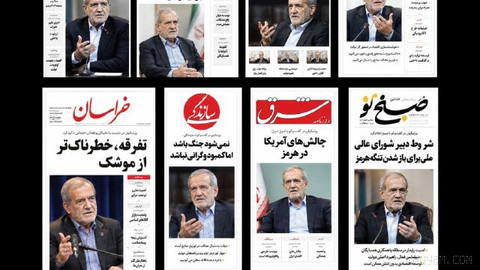
It appears that Iran’s six conditions are not about the subject of negotiation, but about the position of this country.
Previously, although Iranian officials had said that an agreement with Oman does not mean the reopening of the Strait of Hormuz, the president and officials at the Foreign Ministry had, to some extent, conditioned this issue on the U.S. returning to the memorandum of understanding and its commitment not to violate it.
Now it appears that the Supreme National Security Council has increased its demands—an action that, even if it is aimed at pressuring the United States and extracting concessions in negotiations, has its own risks, and it is not clear what the United States’ response will be.
Hashtags: ["BBC Persian"]

Comments
Top comments