


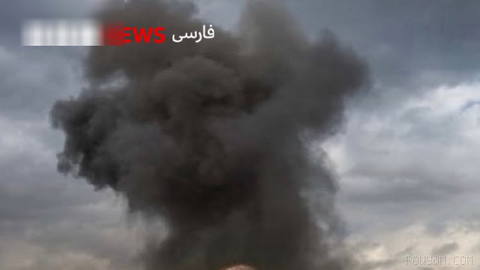
A senior official at Iran’s Department of Environment, referring to the environmental consequences of the recent war, said that attacks on fuel depots, tankers, and oil and gas facilities have caused oil pollution along the southern coasts and increased air pollutants in some cities.
The human environment deputy of the Department of Environment also said that in attacks on fuel depots in Tehran and Tabriz, “about 300,000 tons” of oil products were targeted, and the burning of these materials introduced significant pollutant compounds into the air—an issue, according to him, that has had a considerable negative impact on the air quality of Tehran.
According to him, during the explosions at gas refineries, “about 200 million cubic meters” of natural gas was released into the atmosphere, which is notable not only for air pollution, but also for the release of greenhouse gases.
He emphasized that in order to determine the exact scope of the environmental damage from the war, the type and amount of pollutants released, the duration of their persistence in the air, and also the extent of oil pollution in coastal areas must be investigated.
📷 Nadia Pormah/Mehr news Photo caption: The oil depot in Karaj after the attack by the United States and Israel in the month of Esfand




Comments
Top comments